




Designated Area Migration Agreement (DAMA)
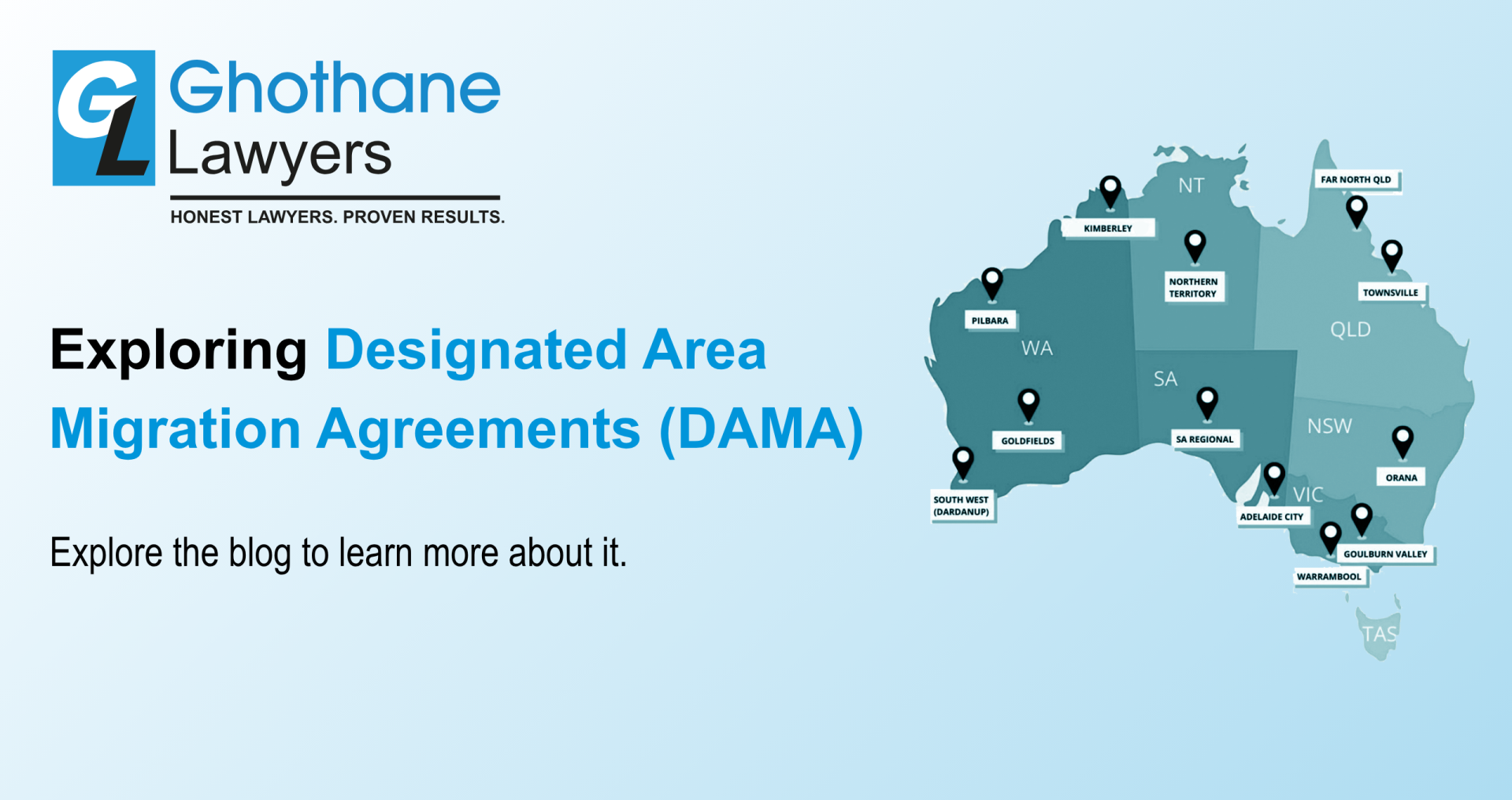
A Designated Area Migration Agreement (DAMA) is a formal agreement between the Australian Government and a state, territory, or regional authority known as the Designated Area Representative (DAR). It allows the region to access more occupations than the Designated Area Representative (DAR) skilled migration list and may also provide negotiated concessions on certain visa requirements.
Designated Area Migration Agreements (DAMA) exist because some regions have ongoing labour shortages that the Designated Area Representative (DAR) occupation lists don’t cover. The government negotiates a tailored arrangement for each region, so a Designated Area Migration Agreement (DAMA) in the Northern Territory can look quite different from one in the Goulburn Valley.
A Designated Area Migration Agreement (DAMA) is not a visa. It is an agreement that supports certain employer-sponsored visas and provides employers with access to skilled workers under the terms of the agreement.
How a Designated Area Migration Agreement (DAMA) Works: The Two-Tier Structure
Designated Area Migration Agreements (DAMA) run on two levels.
Tier 1 – The head agreement.
Negotiated between the Australian Government and the relevant Designated Area Representative (DAR) for a defined region. It generally runs for five years and sets out which occupations and which concessions apply in that region. Terms from one Designated Area Migration Agreement (DAMA) don’t carry over to another.
Tier 2 – Individual labour agreements.
Once a head agreement exists, an eligible employer in that region can apply for its own labour agreement. This means:
- Getting endorsement from the Designated Area Representative (DAR) first, then
- Applying to the Department of Home Affairs for the labour agreement itself.
Once approved, the employer can nominate and sponsor workers for the occupations that agreement covers.
Can You Apply for a Designated Area Migration Agreement (DAMA) Directly?
No. This is the most commonly misunderstood part of the Designated Area Migration Agreement (DAMA).
You can’t apply for a Designated Area Migration Agreement (DAMA) yourself. You need an employer that:
- Operates in the relevant designated region,
- Holds an approved Designated Area Representative (DAR) endorsement and labour agreement, and
- Is nominating you for an occupation covered by that region’s head agreement.
No eligible employer, no Designated Area Migration Agreement (DAMA) pathway. If you don’t have one yet, look for an employer operating in a Designated Area Migration Agreement (DAMA) region with a role that matches that region’s occupation list.
Visa Pathways Under a Designated Area Migration Agreement (DAMA)
A Designated Area Migration Agreement (DAMA) labour agreement can support nomination under several visa subclasses. However, not every region or occupation has access to all three options. The available visa pathways depend on the specific labour agreement.
| Visa | Type | Role under Designated Area Migration Agreement (DAMA) |
| Skills in Demand (SID) – subclass 482 | Temporary | Most commonly used pathway; may carry concessions not available under stanDesignated Area Representative (DAR) 482 nomination |
| Skilled Employer Sponsored Regional – subclass 494 | Provisional | Regionally focused; access depends on the terms negotiated for that region |
| Employer Nomination Scheme – subclass 186 | Permanent | Available under some (not all) Designated Area Migration Agreement (DAMA) arrangements, for eligible occupations |
Designated Area Migration Agreement (DAMA) Occupations
Each Designated Area Migration Agreement (DAMA) has its own occupation list, and these lists can vary significantly between regions. An occupation on the Orana Designated Area Migration Agreement (DAMA) list in NSW will not necessarily appear on the Pilbara Designated Area Migration Agreement (DAMA) list in WA. Some DAMA occupation lists may also include occupations that are not available under the standard skilled occupation lists.
Lists change. Check the current list for your specific region – don’t assume, and don’t go by another region’s list.
Designated Area Migration Agreement (DAMA) Concessions
Depending on the region, occupation and visa pathway, a labour agreement may include negotiated concessions on:
- English language requirements
- Age requirements
- Minimum salary thresholds
- Skills or work experience requirements
Concessions aren’t standard. Designated Area Representative (DAR) across every Designated Area Migration Agreement (DAMA) – what applies in one region won’t necessarily apply in another. They also don’t remove every visa requirement; health and character checks still apply regardless.
Employer and Worker Requirements
Employers generally need to:
- Operate a genuine business in the relevant designated region
- Show a real labour shortage in the nominated occupation
- Show genuine efforts to recruit Australians and permanent residents first
- Get Designated Area Representative (DAR) endorsement, then apply for the labour agreement with Home Affairs
- Meet ongoing sponsorship and reporting obligations
Workers still need to meet the relevant visa requirements. Concessions do not remove all requirements. Depending on the agreement and visa subclass, these may include:
- Relevant skills, qualifications and experience
- English language ability
- Health and character checks
- Compliance with visa conditions once granted
How the Designated Area Migration Agreement (DAMA) Process Works
- Check the region: Is the employer and role within a current Designated Area Migration Agreement (DAMA) region?
- Check the occupation: Is the role on that region’s current Designated Area Migration Agreement (DAMA) occupation list?
- Assess the employer: Can the business meet Designated Area Representative (DAR) endorsement requirements, including labour market testing?
- Get Designated Area Representative (DAR) endorsement: The employer applies to the relevant Designated Area Representative.
- Apply for the labour agreement: The employer lodges the request with the Department of Home Affairs.
- Nomination and sponsorship: Once approved, the employer nominates the worker for the appropriate visa subclass.
- Visa application: The worker lodges the visa application with supporting evidence.
- Department assessment: Home Affairs assesses the nomination and visa application.
- Visa decision: The Department makes a decision on the application.
Steps, timeframes and documents can vary by region and visa subclass.
Current Designated Area Migration Agreement (DAMA) Regions in Australia
There are currently 13 Designated Area Migration Agreements (DAMA) across Australia, each run by its own Designated Area Representative (DAR) with its own occupation list and terms:
| Region | State/Territory |
| Adelaide City Technology and Innovation Advancement | SA |
| East Kimberley | WA |
| Far North Queensland | QLD |
| Goulburn Valley | VIC |
| Great South Coast | VIC |
| Northern Territory | NT |
| Orana | NSW |
| Pilbara | WA |
| South Australia Regional | SA |
| South West | WA |
| The Goldfields | WA |
| Townsville | QLD |
| Western Australia | WA |
DAMA arrangements can change, so check the relevant Designated Area Representative (DAR)’s website for the latest occupation lists and endorsement requirements. You can also contact us for guidance on your options.
Does Designated Area Migration Agreement (DAMA) Lead to Permanent Residency?
Some Designated Area Migration Agreement (DAMA) arrangements may provide a pathway to permanent residence, usually through the subclass 186 visa. Eligibility depends on the region, occupation, visa pathway, and your individual circumstances, including your age, English ability, skills, and employment history.
Designated Area Migration Agreement (DAMA) doesn’t guarantee permanent residency, and not every Designated Area Migration Agreement (DAMA) region or occupation has a PR pathway. Worth checking early rather than assuming it applies.
Frequently Asked Questions
What is a Designated Area Migration Agreement (DAMA)?
A Designated Area Migration Agreement (DAMA) is a formal agreement between the Australian Government and a regional, state or territory authority that allows eligible employers in that region to sponsor overseas workers for occupations and concessions not always available through standard Designated Area Representative (DAR) skilled migration.
Is a Designated Area Migration Agreement (DAMA) a visa?
No. Designated Area Migration Agreement (DAMA) is a labour agreement framework, not a visa subclass. It sits behind certain employer-sponsored visas, including subclasses 482, 494 and 186.
Can an individual apply for a Designated Area Migration Agreement (DAMA) directly?
No. You need an eligible employer operating in the relevant designated region, sponsoring you for an occupation covered under that region’s Designated Area Migration Agreement (DAMA) head agreement.
What occupations are available under Designated Area Migration Agreement (DAMA)?
This varies by region. Each Designated Area Migration Agreement (DAMA) has its own occupation list set out in its head agreement, and lists are reviewed periodically by the relevant Designated Area Representative.
Can a Designated Area Migration Agreement (DAMA) lead to permanent residency?
Some Designated Area Migration Agreement (DAMA) arrangements provide a pathway to permanent residence, generally through subclass 186, but this depends on the region, occupation and individual eligibility. It isn’t automatic or guaranteed.
Which visas can be used under a Designated Area Migration Agreement (DAMA)?
Depending on the labour agreement, a Designated Area Migration Agreement (DAMA) can support the Skills in Demand (SID) visa subclass 482, the Skilled Employer Sponsored Regional visa subclass 494, and the Employer Nomination Scheme visa subclass 186.
Can a Designated Area Migration Agreement (DAMA) lawyer in Melbourne help with my application?
Yes. An immigration lawyer in Melbourne can help employers with endorsement and labour agreement applications, and help workers understand whether their occupation and circumstances fit a current Designated Area Migration Agreement (DAMA) pathway.
Talk to a Designated Area Migration Agreement (DAMA) Lawyer in Melbourne
Considering a Designated Area Migration Agreement (DAMA) labour agreement as an employer, or exploring whether a Designated Area Migration Agreement (DAMA) could support your visa pathway as a worker? Get professional advice before committing time to the process.
Ghothane Lawyers can help you understand whether your region and occupation may be eligible, explain employer requirements, review your visa pathway options, and identify any applicable concessions.
Book a confidential consultation to discuss your Designated Area Migration Agreement (DAMA) options with our Melbourne immigration team.